Creativity and originality

Being a graphic artist, creativity is expected of me. I used to stress about it (even had panic attacks!) when I was in design school and a few years after–originality was highly rewarded by attention and praise, and I had to work very hard to be recognized. I suspected that I am just not that talented.

Eventually, I discovered that originality is built from careful observations and analysis of works of others, plenty of emulations, social sensitivity, and a pinch of luck. Some are naturally quick; others, like me, believe that talent is what it really takes and whether or not they have it.

As an emerging researcher, I get the familiar urge to create a study that is elegant, original, but also meaningful and even groundbreaking. Yesterday in our Visual Research Methods class, the Bersons gave us some examples of amazing visual presentations of data and findings, and I felt that “creative” rush.

However, I am wary of wanting to produce something just for the sake of being “original.” In some ways, I may have the advantage over others because I am experienced with visual communication a bit more than most, but I need to be careful not to lose meaning and purpose of research. It must contribute to the body of knowledge.

Connecting and networking

Being connected is important to keep ideas fresh.

My first job as a graphic artist was in the small office of “Town-N-Country” and “Carrollwood News,” satellite weeklies of the local major daily, The Tampa Tribune.  I was only one year into my graphic design program, with one year left to go, and I already had a job “in the field.” I was proud. The fourteen months that I spent in that position were the time of amazing professional growth. I designed ads, answered phones, and did some light office management duties. The five salespeople who worked with me were happy, the advertisers were happy, the boss was happy, and I was happy, too. Only I felt like I was the only one of my species. A month after I had earned my diploma, The Tampa Tribune announced that it will absorb all the little weeklies–we all were moving downtown! Before the move, all graphic artists had a meeting in a trashed, abandoned old newsroom on the second floor, and our new leader had explained her vision for the creative department: we will fix up this room, we will have desks here, pagination there, recreation area here. Her plan was wonderful! There were going to be 60 artists working together, side by side. There were going to be meetings and creative contests, critiques, and best of all, the experience of senior artists, all at our fingertips. The year after the move was even better than my first year with the company–I grew as a designer, I connected; I even met my husband, a designer like me.

I find it difficult to just “go out” and connect, to network. I enjoy meeting new people and getting to know them. I love hearing their ideas and learning about how they work toward their goals, but I will almost never seek out these connections on my own. I do not know why–perhaps, I am too much of an introvert. I have to be in the environment where these connections occur naturally, from frequent interactions or special circumstances.

A few thoughts on finding a theoretical framework

As I browse literature to find a theoretical framework to undergird my study of relationship with Becky, I notice how collectively, the scientific literature is not a “body” of work at all, it is a sea with waves and tides of emerging new fields and theories. Some, like waves,  gain strength and momentum, reach the shore, then die off, replaced by other waves.

I walk on the shore, looking for treasures washed off on the sand.

Dissertation Ideas

The dissertation is a reality that materialized at the end of my master’s coursework. It is remarkable how differently my fellow students think of their dissertations–I have been asking–they are all at different stages.

The spectrum begins with “I have no clue” and ends with “I am getting ready to defend, my topic is awesome!” Many find the idea stressful. Me? I cannot wait! I know it will be something great–otherwise, why would I even bother with it, right? Besides, Dr. Richards said it will be great, whatever it is, in her email to me on June 16, 2018.

My problem is too many ideas–each seems better than the last one. I’d say I am drowning in them, only drowning is such a negative term–if water is to describe my experiences, then I am in a waterpark–sliding, jumping, diving, and floating in the lazy river, depending on what class I am taking and with whom. There is no sense of anxiety, at least, not yet, only the sense of adventure.

Idea Number One

Currently, I am on my fifth or so topic idea. When I first started my Master’s program, I wanted to investigate what it means when people say “I do not test well.” This was completely in line with my “Research, measurement, and Evaluation” program. I wanted to look into the culture of standardized testing (I am not a fan of it as a parent, but because I grew up in the USSR, I cannot say I am entirely opposed to it–it was a fact of life, everyone had several end-of-course exams beginning with grade four or so.)

I wanted to bring into my study the topic of educational philosophies, the psychological piece centered on “stress” and “test anxiety.” Source of data collection? Well, surveys and interviews. A quantitative analysis of available test records was also an idea, but I knew the data may not be available. This idea came the year I took my Foundations of Curriculum class and statistical analysis courses I and II. GRE exam was a fairly recent event, too.

Idea Number Two

There were a few ideas in-between. One summer, I took Foundations of Educational Research class online and was taken with the idea of researching Motivation in online learning. At that time, I was still planning to do my Ph.D. in Educational Psychology and coincidentally, was still processing my experiences as an undergrad (I earned the entire Psychology degree online at Saint Leo University). I felt I was a connoisseur of online learning and thanks to plenty of shop talks at home with my husband, an online course designer at St. Pete College, we had much to discuss.

The theory? Deci and Ryan’s Theory of Self-Determination. Method? Quantitative. Design? quasi-experimental.  I enjoyed planning every little detail of my study. Down to the design of every instructional activity and whether or not I should consider it as a variable. Then I took my first qualitative class, and suddenly, this idea was not as much fun as… well, I did not know yet, but I knew the feeling–a new idea was about to hatch.

Idea Number Three

The Christmas before my second qualitative class, there came trouble at Becky’s charter school–the school refused to provide accommodations to her, and we felt our rights were violated. More than anything, I was angry that her teacher and principals refused to admit–both in word and deed–that she has autism. Earlier that year, Becky was also Baker Acted, and by the time the charter school troubles came, my husband and I just went through a real-life paradigm shift. We finally came to terms that Becky does have autism, and we were trying to figure out what it meant for us, for her, for the boys, for all of our present and future. So in qualitative II, I started writing an autoethnography about mothering my high-functioning autistic child. This was personally therapeutic and seminal to my further development as a researcher. I returned to my original reason for wanting to abandon the life of a starving graphic artist when I enrolled at Saint Leo to study psychology in 2012-to learn about autism. So my dissertation idea was to explore the bioecology of an autistic child’s development. Theoretical framework? Bronfenbrenner. Methodology? Qualitative. Method? Interviews, narrative, autoethnography, and visual, as appropriate.

Idea Number Four

Then I started writing about how Becky and I connect–a facet that fits my study of bioecology well as a link between the developing child and a prominent influence on her: me. This project coincided with my Philosophies class where I attempted to place myself on the grid of philosophical approaches to inquiry. Becky went through a rough patch, I did not feel like writing about our connection, and then spiraled down Lewis Carrol’s rabbit hole, much like Alice. I became aware that despite producing several reflexivity statements in my last year, I have no clue who I am as a researcher! One this was for sure: I was confused. I ran for help to Dr. Richards, to Jenni, to Dr. Zeidler. I wrote one journal entry after another, trying to make sense of my thoughts.  Through it all, I was conscious of my development and decided to do a dissertation about the “birth of a researcher” and to investigate investments of professors, of courses, of personal circumstances, and other elements that were shaping me into who I am. The brilliant part is that dissertation would be the natural evidence of the journey. Methodology? Qualitative, of course! Method? I would use my journal entries, email exchanges with professors and students, course descriptions and reflections and other pieces as data, then assemble them into one final piece.

Idea Number Five

It is getting better and better! My growing epistemological pains and studies initially led me to believe that positivism is disgusting to a truly qualitative researcher, yet, I grew up a positivist. Could I be bi-oriented as I am bi-lingual and bi-cultural? I considered an analogy: Mowgli, a human, raised by the wolves. Never quite fitting with either world and yet, a forever part of both. While it is tempting to assume that “people” in this analogy represent the more humanistic, constructivist look at life and the animals are more in line with Pavlov’s dogs, and therefore, data-driven, inhuman, positivistic, I am cautious. Dogs (as well as wolves, bears, and panthers, too) are wonderful, and by no means, the parallel expresses a belief that Russians are less human that Americans, or any other nonsensical idea of the sort. I am really after the illustration of how difficult it is for Mowgli to fit into either culture, to completely align himself with either ideology, culture, philosophy, or even physical location of his bed. At the moment, I feel like a researcher Mowgli–a positivist through upbringing, an interpretivist through personal development. This does not have to be a  deficit–it could be a strength. Of course, there is a chance that some positivists and quantitative researchers will disown me, much like some of Mowgli’s wolf pack did. Some interpretivists will turn their noses and decide I reek of “dog,” but as long as I have my Baghiras and my Baloos, and my kind villagers, I could really uncover something extraordinary.
Method? Qualitative. Methodology? Bricolage! Narratives, emails, drawings, photos, and maybe even sculptures. Limitations? …as abstract as the sky.
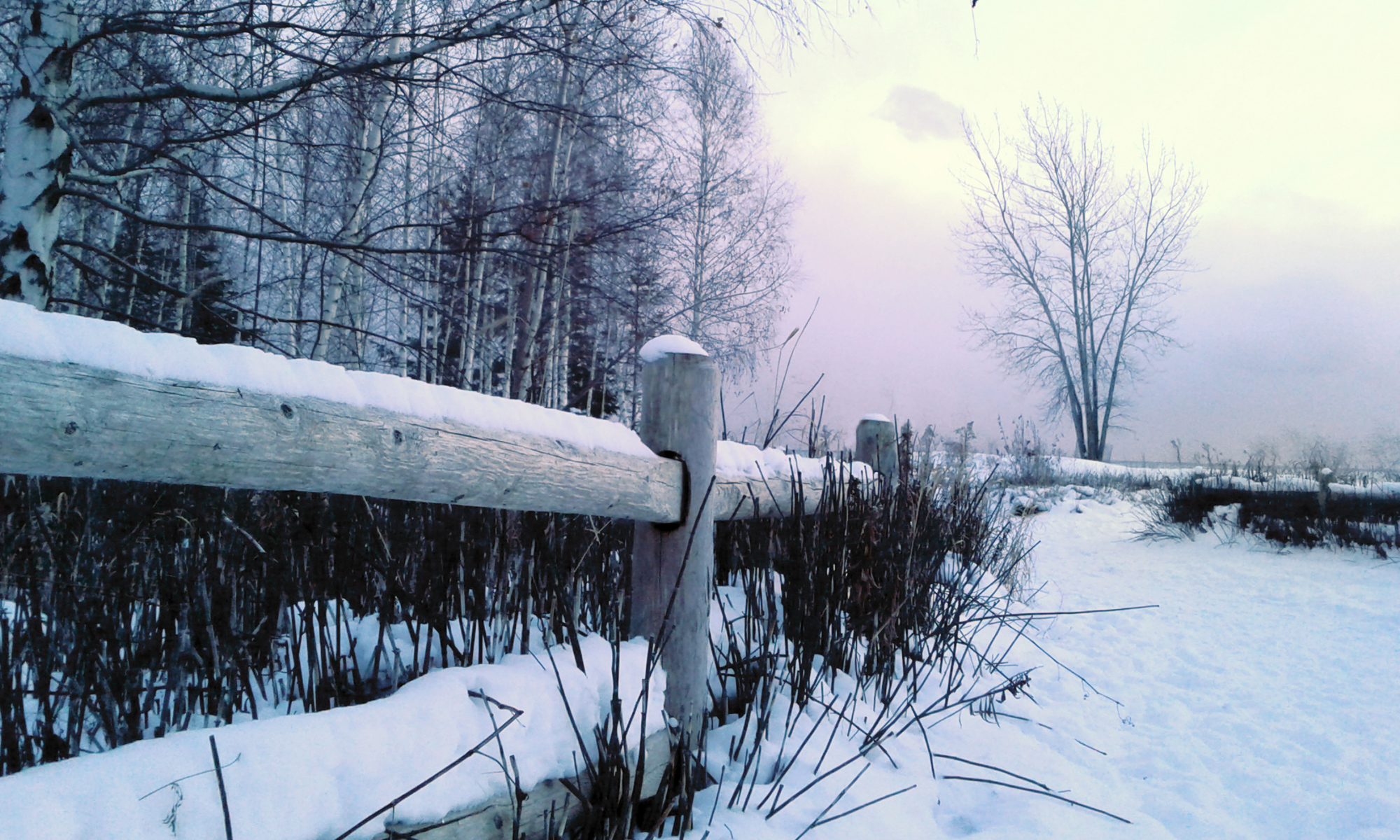
 

The Train of Motherhood

When I was 18, I took a train trip from my hometown, Khabarovsk, to Moscow. I traveled with a large group of friends, and it took us one week to get there. It was a marvelous time in my life. I met new people, gained new perspectives, bonded with friends, took time to think… Motherhood seemed similar. I could not wait to go, and everyone I cared about knew I will be going.

Prior to the trip, I imagined what it will be like–nearly a month without my parents, the life on the train, the capital… I was bursting with excitement. Every friend I cared about was going, and everyone expected I will be going, too.

Of course, I prepared for it. My mom helped me pack and bought me a few things. Dad issued advice.  Motherhood is similar to this trip

Not feeling it

I am stuck. Again! This time, because of Becky. She has been really mean and moody lately, and I was afraid we will have to Baker Act her again. Totally not feeling up to writing about how she and I connect.

Analysis and autoethnography

After I met with Jenni almost two weeks ago, I have been thinking about the analysis part of the autoethnography. I have been preoccupied with the analysis in autoethnography since last February-my search even led me to the discovery of Carolyn Ellis (and the bitter disappointment after our email exchange when I learned she is retiring THIS very summer! I missed her by one semester!).

So analysis… I was surprised when Jenni told me to just write and get it out, and do a more analytical autoethnography later. Does it mean that autoethnography can be something that is not analyzed? Curious.

Another bit of Reflexivity

When my two oldest children were preschoolers, I often stopped and marveled: I am a mom? When did this happen? Time was a smooth, swift flow of days. My new identity as a mother was still being formed, like a new layer of skin.

Today, I refer to myself as the “mother of three,” but I am used to this idea now. It is a good feeling, just as good as the original one, just different. I do not take my motherhood for granted. I realize that I am who I am today because of my children.

It is getting more difficult to remember myself as a non-mother. I will always have that center–the “Me” who is genderless, cultureless, ageless, profession-less at the core. The me whose most powerful engine is curiosity,  not fear or conformity. I am just as easily enchanted by the impressive angles  If I could permanently exist in this state, I would. But I know I’d become lonely, and bored.

I never doubted I would be a good mother, and I always knew I wanted to have children.

Final Reflection

Who am I as a researcher?

My answer to this question is just as fluid as my researcher identity is. I say “it depends” because I discovered that each new interview project added something new to my understanding of why I want to do research. The phenomenological interview project sent me to the philosophers’ corner as I wrestled with my epistemological beliefs and the construct of motherhood; the ethnographic interview made me aware of my membership in a world that is greater than my cozy little oyster shell. The feminist interview caused me to interrogate my womanhood just as I learned more about the woman I interviewed; the oral history project took me back to my Soviet roots and reminded me that history is subjective. I once again concluded that research questions are everywhere and that as long as I remain curious, I will never want for interesting topics to study.

What are my assumptions concerning knowledge production?
My entire life I thought that knowledge is something that is. Like the knowledge of “good and evil” in the first chapter of the Bible, it exists independent of us humans. I imagined that research is just one of the ways to tap into it, which is why methodology is so important: the more sound the research design, the more knowledge you get.  In the past few weeks, I realized that knowledge may actually be something that we humans create, so I busied myself with figuring out how method fits in this epistemological view. Interviews helped me understand how subjective the term “quality” can be, and that I need to view such subjectivity as an asset rather than a limitation. I concluded that rigor is more important than any attempt at validity, so if I create knowledge, I better make sure I did my absolute best–no shortcuts, no compromise.

How do I ask interview questions?

By listening to my recordings, I found that my questions need a lot of practice: I mumble, ask convoluted questions, and even talk to myself now and then. However, I must consider how this blends in with my subjectivity as a researcher: I am still learning, and I wonder if my lack of experience actually helps establish rapport with participants.
When roles are reversed, I always find myself most frank in conversations with peers, not officials; I am also more open to being vulnerable if my conversation partner is not afraid of being vulnerable as well. Therefore, by coming across as naturally imperfect interviewer, I may be inviting a more genuine exchange.

What are the implications of my interview practice for the data generated?

I need to prepare better. I need to experiment more. This semester, the majority of my participants were family and friends, and our learning environment was low risk and fun. However, as I look ahead to my future research ideas, I realize that my experiences will eventually include uncomfortable silences, lack of connection with the interviewee, misunderstandings, cultural mismatches, emotionally sensitive topics, and other unpredictable elements discussed by Roulston in chapter 9. I believe that more experience may translate into more rich data, but I think the trick will be in designing studies that utilize my strengths and allow room for error.

What are the implications of my theoretical assumptions concerning research for how data might be analyzed, interpreted and represented?

I am still trying to learn the answer to this question. My goal is to become familiar with as many theoretical angles as I can because I believe that for the purpose of analysis, theoretical assumptions are tools; therefore, the bigger my toolbox, the more I can do with my data, the more rigorous my research process.

As I reflect on the past few weeks, I am grateful for this opportunity to think, learn, and grow in this semester. Thank you.


References

Tong, A., & Dew, M. A. (2016). Qualitative research in transplantation: Ensuring relevance and rigor. Transplantation, (4), 710.

Oral History Interview

Location: participants live in Russia, Khabarovsk. Connected via Skype (recorded by Zoom).
Participants: my mother (77 years old) and my dad (75 years old)

Wow, this was almost impromptu. I had to seize the moment: yesterday I spoke with my parents on Skype and asked them if they would be interested in telling me about some of their memories from the Soviet era. They asked me bluntly: “like what?” and I blurted out “The day Stalin died” because this was the first thing that popped into my head that I knew will not be too touchy. The current political relationship between the U.S. and Russia has left a sticky, smelly, uncomfortable divide in our recent conversations, and I often feel caught in between my husband’s feelings about Russia’s behavior in the international arena and my parents’ comments. Truly, we live in entirely different worlds, and I am unwilling to take sides. Why do I have to take sides anyway? And yet, somehow, I get emotionally involved against my will. To my parents, I am an “American;” to my husband, I am “Russian…”

My parents wanted to start the conversation immediately, and I was afraid that if I wait until mid-June, they will lose interest, or that their account will be recalled and processed through the lens of modern times, so I decided to do this project sooner. We agreed to Skype the next morning (their night).

…So Stalin it is–back in my day, he was a god turned villain, and I know that the controversy over his role in my parents’ lives (and in my childhood) is actually a  point of convergence, not divide. At the very least, it is ambiguous and therefore, does not immediately throw red flags for heated debates. I Skyped in the next day, and they had an entire day to think about our conversation.

My preparation was limited to quickly choosing the topic and recalling why the death of Stalin came up. Three years ago I took my kids to visit my parents, and my mom accompanied us to a local history museum. There, in the halls dedicated to the WWII era, I remember having a conversation with the curator about the day Stalin died. The curator was my mom’s age, and what I did not expect was that she reflected on the event with sadness. My mom jumped into our conversation, and I realized how complex Soviet people’s relationship with their leadership had been. So I have been itching to ask my parents more about their experiences, and I invited both of them to participate in my interview.

I tried to begin the recording with a formal statement about why I am recording our conversation and how I plan to use it, but I struggled with words–my Russian is getting rusty. They laughed, and I wondered if I can learn much about interviewing from talking to my parents. But the topic was simply too interesting to abandon. Although the conversation itself was fascinating, the purpose of this post to reflect on the process, and with this in mind, here is what stood out to me:

Things that did not work for me:

  1. Interviewing via Skype or Zoom inevitably leads to technical issues.
    Specifically, I could not figure out how to record our conversation using Skype app on my tablet, so I opened Zoom, sent the invite to my parents, but that was not good either because (a) my mom could not get Zoom going on the account of being unfamiliar with the application and installation process or even IP conflicts and (b) I still could not figure how to record it on my tablet. So I ended up speaking to them via Skype on my tablet and recording our conversation by Zoom on my laptop. This actually ended up being a blessing in disguise because I ended up being the focal point of the recording, and I was later able to see my body language and facial expressions.
  2. Speaking via Skype produced a lag. My father would complain that my lips are moving, but there was no sound. In other words, our “real” time was not that real because what I saw and heard was possibly perceived differently by them. In other words, while I was concentrating on our conversation, they were potentially concentrating on our Internet connection, and thank God I was speaking with my parents because we had no problem asking to repeat the bits either of us could not hear or understand. Had this interview been with a less familiar person, I would be worried about the dynamic–the interviewee being too shy to ask, or me not wanting to interrupt an account in hope to make sense of the misunderstood pieces in the recording, later.
  3. I should have prepared more concrete questions to serve as guides. The conversation ended up being amazing, but I recall at least three different times when I could have taken a new direction. For example, when I asked them to tell me about the day Stalin died, my mother had an almost mocking facial expression when she talked about her grief. She was 12, and her mood was “I am not going to button my coat because it does not matter if I get sick–Stalin is dead!” I asked whether her grimace was a gesture of disapproval of her then-disposition or whether it was because she was uncomfortable discussing her feelings. I could definitely see myself straying into a topic “Soviet identity,” for example, had I not been resolute to keep questioning her about the events. Similarly, with my dad, I asked him about newspapers and media as the main mode of news dissemination, and I almost got sidetracked into discussing propaganda and trust. I suppose this would work for exploratory interviews, but in this particular case lack of preparation caused a distraction.

Things that worked:

  1. Interviewing two people at the same time worked well–I felt that they led the conversation, bracketed each other’s accounts, and added extra dimensions to my data through disagreements. I do not think this would work well for most interviews, especially if two people are not familiar with each other. Oral history was a perfect genre for this particular dynamic, and I feel that it was a good conversation for all of us.
  2. Familiarity with each other put us all at ease, and I feel it elicited frank and sincere responses.
  3. I thought my eye contact, body language, and energy were good, although I can see how this might be debatable if I interviewed a person from another culture.
  4. I loved the experience!